Notes & Gatherings
3rd July 2026
By Nicola
Your wedding tables are where guests spend a large part of the day. They sit, talk, eat, listen to speeches and enjoy the atmosphere you have created.
Beautiful table styling can make the wedding breakfast feel warm, personal and carefully considered, but it is also one of the easiest areas to overfill.
Flowers, candles, glassware, menus, favours, napkins, place cards, table numbers and serving space all need to work together. If too much is added, the table can feel cluttered rather than elegant.
At Petals & Posies, we create natural wedding flowers and thoughtful table styling for couples across Hampshire. This guide explains how to style your wedding tables without overcrowding them.
Quick answer: how do you avoid overcrowding wedding tables?
Before choosing flowers or candles, think about the table shape, number of guests, glassware, cutlery, menus, serving style and how much space people need to talk and dine comfortably.
A table usually feels best when there is one clear styling direction, enough breathing space and details that support the atmosphere without competing with each other.
Start with the table shape and food service
Table shape makes a big difference to what will work.
Round tables often suit a central arrangement, bud vase cluster, low bowl, footed vase or candle grouping because guests view them from all angles.
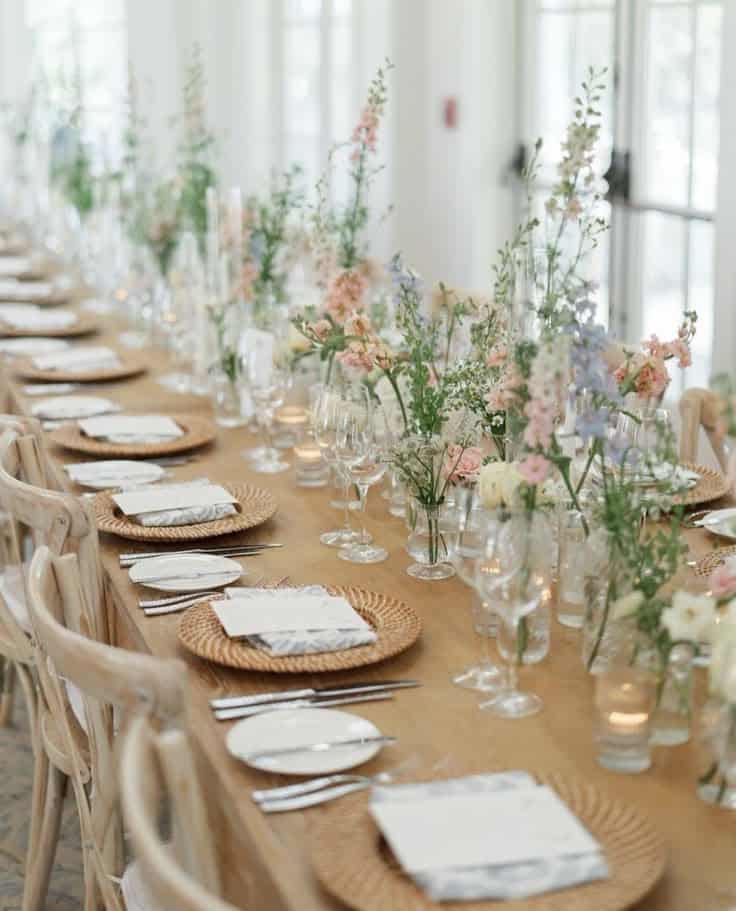
Long tables, trestle tables and banqueting tables can work beautifully with repeated details, such as bud vases, taper candles, runners, low flowers or grouped vessels through the centre.
However, long tables need particular care if food is being served on the table. If your caterer is placing sharing platters, boards, bowls or sharing plates down the centre for guests to help themselves, the styling must leave clear space for food service.
In this situation, fewer flowers, slimmer arrangements and carefully spaced candles usually work better than a continuous line of items. Small bud vases can still look beautiful, but they need gaps between them so platters can be placed safely and guests can reach the food comfortably.
Oval tables, mixed layouts and top tables need extra planning because spacing may change across the room.
Before deciding on your table flowers, confirm the table size, number of guests per table, serving style and whether charger plates, side plates or extra glassware will be used.
Think about guest comfort first
A beautiful table still needs to work as a dining table.
Guests need space for plates, glasses, cutlery, menus, favours and sometimes shared dishes. They also need room to pour drinks and talk comfortably.
A table may look lovely when empty, but once glassware, water bottles, wine, bread, food service and personal items are added, the space can quickly feel busy.
Good table styling should feel generous, not cramped.
Choose low flowers or tall flowers carefully
Both low and tall flowers can work beautifully, but they create different effects.
Low flowers feel intimate, relaxed and easy to talk over. They are ideal for many wedding breakfasts because they keep the focus on conversation.
Tall flowers create drama and height, especially in rooms with high ceilings. However, they need the right stands, weight, sightlines and table proportions.
The most important rule is that flowers should not block guests from seeing each other.
Bud vases are beautiful, but they still need space
Bud vases are a popular choice for natural, relaxed table styling.
They bring softness, colour and movement without feeling too formal, and they work well when couples want flowers to feel spread across the table.
However, bud vases can still overcrowd a table if there are too many of them, especially with candles, menus and full place settings.
A few well placed bud vases can feel more elegant than a table filled with too many small items.
Use candlelight with care
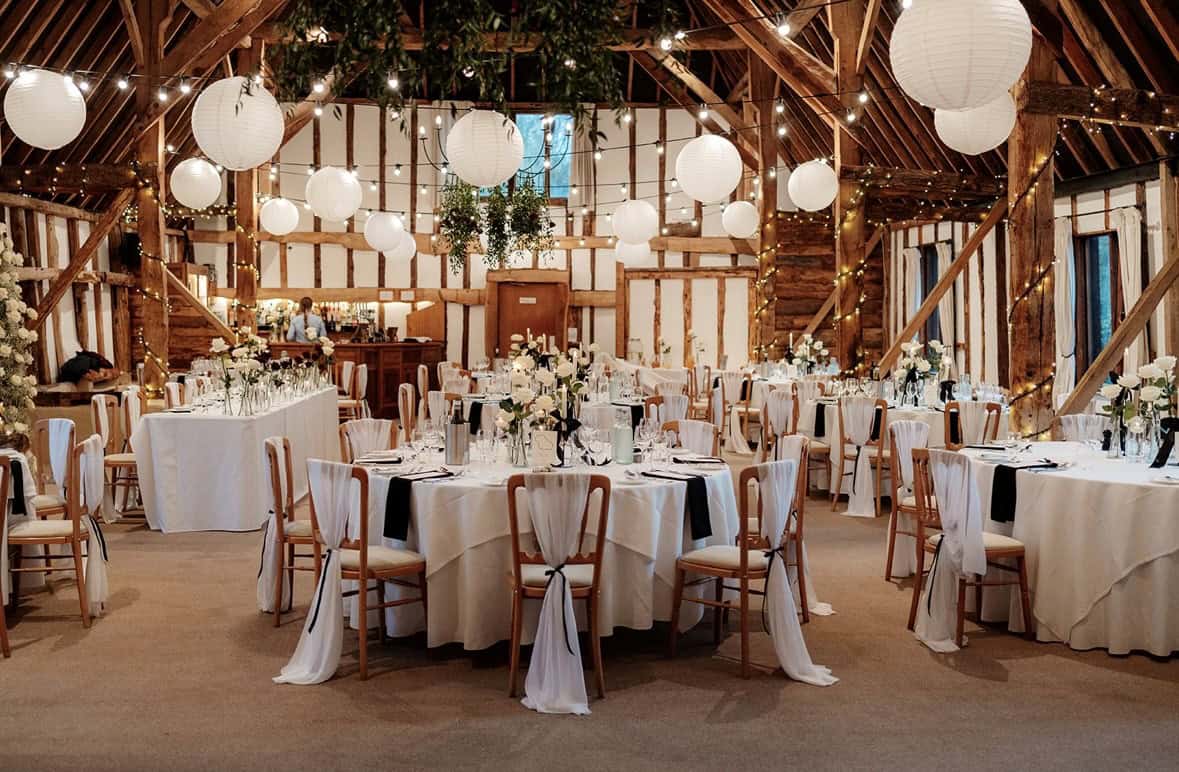
Candlelight adds warmth, depth and romance to a wedding breakfast room. It can make a table feel more intimate, especially as daylight fades into evening.
Candles need to be planned carefully. Venues may have rules about open flames, candle holders, placement and safety. Some venues require enclosed flames or LED alternatives.
Candles also need physical space. Taper candles, pillar candles, tealights, lanterns and glass holders all take up room and need to be placed where they will not interfere with guests, flowers, menus or service.
As part of our wedding styling service, we consider how flowers, candlelight, table details and venue rules work together so everything feels safe, balanced and beautifully placed.
Consider table runners, linens and napkins
Linens can change the whole feeling of a table.
A runner can soften a wooden table, napkins can bring colour, and charger plates can add a more formal layer. The key is to choose details that support the flowers rather than competing with them.
If the flowers are full and textured, you may need simpler linens. If the flowers are minimal, a runner, coloured napkin or candlelight may bring the depth you need.
Do not forget catering and service
Your caterer and venue team need space to serve food and drinks.
If food is plated, the table may need less central serving space, although there still needs to be room for water, wine, bread, condiments and glassware.
If sharing platters, bread boards, side dishes, sauces or grazing style food are placed on the table, the centre needs to remain much more open. This is especially important on banqueting tables, where food and styling are often competing for the same central space.
Before finalising table styling, it is helpful to understand exactly how the wedding breakfast will be served. This allows the flowers, candles and finishing details to support the meal rather than get in the way of it.
Keep sightlines clear for speeches
During speeches, guests need to see the couple, the speaker and each other.
Tall arrangements, large candles or statement pieces can sometimes interrupt sightlines, especially on top tables, sweetheart tables or smaller rooms.
This does not mean avoiding height completely. It simply means placing taller details where they support the room rather than blocking key views.
Style the top table with intention
The top table or sweetheart table is one of the most photographed areas of the wedding breakfast.
It may appear in speeches, guest photographs and wider room images, so it deserves attention. But it should still feel comfortable for the couple and wedding party.
Flowers along the front of the table can create a beautiful focal point. This might be a long and low arrangement, meadow flowers, bud vases, candlelight or repurposed ceremony flowers.
If you are moving ceremony flowers to the wedding breakfast, the table design should be planned in advance so the flowers suit both locations.
Use finishing details selectively
Finishing details can make a table feel complete, but they should be edited carefully.
Table numbers, menus, place cards, favours, napkins, candle holders, vases and decorative pieces all add visual detail. When too many items are used together, the design can begin to feel crowded.
Our finishing details are chosen to sit naturally alongside your flowers, styling and venue, helping the table feel considered rather than overdone.
A good question to ask is: does this detail add warmth, meaning or clarity? If not, it may not need to be there.
Think about the whole room, not just each table
A wedding breakfast room is not only a collection of tables.
The entrance, top table, cake table, seating plan, fireplace, bar area and evening space all contribute to the overall atmosphere.
Sometimes it is better to keep guest tables simpler and create impact elsewhere, such as the top table, entrance or cake table. This helps the room feel balanced and prevents the tables from carrying too much of the design.
How to prioritise your table styling investment
If you are working to a particular investment range, focus on the details guests will notice most.
Usually, this means guest table flowers, the top table, candlelight and any details that appear in key photographs.
Our Investment Guide can help you understand typical floral and styling investment before deciding how much to allocate to table flowers and finishing details.
Rather than spreading the budget across too many small items, it is often better to create a few stronger moments.
What to discuss during your consultation
You do not need to know exactly how your tables should look before we speak.
It is helpful to know your table shape, guest numbers, venue room, colour palette and catering style. It is especially useful to know whether food will be plated, served as sharing platters or placed on the table for guests to help themselves.
Inspiration images can also help us understand whether you are drawn to romantic, relaxed, garden inspired, elegant or more colourful styling.
Wedding table styling checklist
Before finalising your table styling, consider:
- Table shape and size
- Number of guests per table
- Glassware, cutlery and plates
- Menus, place cards and favours
- Whether food is plated or shared
- Space needed for sharing platters
- Candle rules at the venue
- Height and width of flower arrangements
- Top table or sweetheart table design
- Guest comfort and conversation space
- How the whole room will feel
Frequently asked questions
How many flowers should you have on a wedding table?
It depends on the table size, layout and style. Some tables need one central arrangement, while others work better with bud vases, candles or smaller details.
Are tall centrepieces practical?
Tall centrepieces can work well where ceilings are high and table proportions suit them. They need careful planning so they do not block conversation or sightlines.
Are bud vases enough for wedding tables?
Yes, bud vases can look beautiful when styled well. They work especially well with candlelight, table runners and thoughtful spacing.
What if we are having sharing platters?
Sharing platters need table space. This is especially important on long or banqueting tables, where flowers, candles and food may all sit through the centre. We would usually suggest slimmer styling, smaller floral moments and clear gaps for food service.
How do we stop wedding tables looking cluttered?
Start with the practical layout, then choose flowers, candles and finishing details that support the design. Avoid adding too many small items without considering the space guests need.
Final thoughts
Beautiful wedding table styling is not about filling every space.
It is about choosing the right flowers, candlelight, linens and details so your tables feel warm, balanced and inviting.
At Petals & Posies, we will guide you on what works for your venue, table layout, guest numbers, food service and overall design. Whether your style is romantic, elegant, garden inspired or relaxed, we can help create tables that feel beautifully finished.
If you are planning your wedding in Hampshire or the surrounding counties and would like help with your wedding table flowers and styling, we would love to hear about your plans.
Get in touch to arrange a relaxed wedding chat with Nicola.